
Cyber Spoilage Insurance
Cyberattacks increasingly create practical operational risks, particularly for sectors such as manufacturing, pharmaceuticals, logistics, agriculture, and food retail. Where cyber incidents disrupt systems that control temperature, quality checks, or environmental conditions, stock may become unsafe or unsellable – even without a data breach or traditional physical damage.
Our Cyber Triggered Spoilage Cover is designed to respond to these scenarios, bridging the gap between cyber and property exposures and addressing losses arising from compromised product integrity.

What Cyber Spoilage insurance covers
- Perishable Stock In Process: perishable goods that are part‑way through production or processing.
- Inventory Held for Sale: finished perishable goods held as stock and intended to be sold.
- Spoilage Clean Up Costs: reasonable costs incurred to remove, dispose of, or remediate spoiled stock.
We offer two trigger options, allowing flexibility depending on your individual risk profile and overall programme structure.
Non-physical damage trigger
Physical damage trigger
Cyber spoilage cover is particularly relevant for insureds with perishable or temperature-sensitive goods, including organisations operating in:
- Food and beverage
- Pharmaceuticals and life sciences
- Agriculture
- Logistics and warehousing
- Cold-chain and temperature-controlled operations
Canopius’ Cyber Spoilage insurance is designed to respond to this exposure, providing a targeted solution where cyber and property wordings may otherwise leave gaps.
Potential Loss Examples
Scenario example: Cyberattack Undermines Product Integrity in Global Food Operations
A multinational food and beverage manufacturer experienced a ransomware attack that rendered its global food safety and quality assurance systems inaccessible. Systems used to validate temperature control, maintain audit trails and generate automated alerts were encrypted across multiple temperature controlled facilities world-wide. While refrigeration equipment continued to operate, the organisation was no longer able to digitally evidence that products had been stored and handled in line with regulatory and safety requirements. At scale, this loss of verification meant product integrity could not be confirmed. Working closely with the insured, we assessed the incident and confirmed that it was a non-physical cyber event with significant operational consequences. Our claims team supported the client in evidencing how the loss of digital validation directly resulted in regulatory non-compliance and the forced write off of inventory, coordinating specialist input to assess system impacts and quantify losses across global operations. The incident resulted in an estimated USD 10 million inventory loss, driven not by physical spoilage, but by the inability to prove ongoing compliance. The case highlights how modern cyber incidents can trigger substantial non-physical damage losses through the disruption of product integrity and traceability.
Scenario example: Operational Technology Compromise Triggers Pharmaceutical Spoilage Loss
A global pharmaceutical distributor experienced a malicious cyber incident affecting a third party that supports the insured’s information technology systems. The incident disrupted systems used to monitor and manage temperature and humidity data within a major pharmaceutical storage facility supplying multiple international markets. Although physical infrastructure, power supplies and refrigeration equipment remained operational, the loss of reliable digital monitoring meant environmental conditions could no longer be verified as remaining within the tightly regulated tolerances required for pharmaceutical storage. Canopius worked closely with the insured to assess how the cyber incident impacted IT‑supported operational oversight rather than physical assets. We supported identification of affected systems, confirmed the regulatory implications, and helped demonstrate how the loss of digital validation rendered the affected stock non‑certifiable for release. Specialist input was coordinated to evidence compliance failures and quantify the resulting financial impact across the inventory. Under strict pharmaceutical quality and release standards, the products could not be approved for sale and were destroyed. The incident resulted in an estimated USD 25 million loss, driven by disruption to information technology support rather than physical damage.
Scenario example: Cyber-Triggered Fire Causes Cold Chain Failure and Stock Loss
A large international cold chain logistics operator suffered a cyberattack, impacting systems responsible for managing building controls and electrical infrastructure at a critical temperature controlled facility. The compromise of these control systems resulted in a cascade failure within electrical equipment, ultimately igniting a fire inside the site. The fire caused direct physical damage to refrigeration units, insulation and other critical infrastructure, forcing the facility offline and halting operations at a key global supply chain hub. Canopius worked closely with the insured to assess the full impact of the cyber event, including both physical damage and wider operational disruption. We supported investigation into how the compromised control systems triggered the fire and coordinated the assessment of damage to infrastructure, refrigeration capability and stored goods. Assistance was also provided in documenting losses as emergency response measures and repairs were carried out. With the facility offline for an extended period, large volumes of temperature‑sensitive inventory deteriorated beyond recovery. The combination of physical damage and prolonged operational shutdown resulted in significant stock losses, with total costs estimated at USD 15 million. This case demonstrates how cyber incidents affecting digitally controlled environments can escalate beyond operational disruption into severe physical damage and spoilage losses.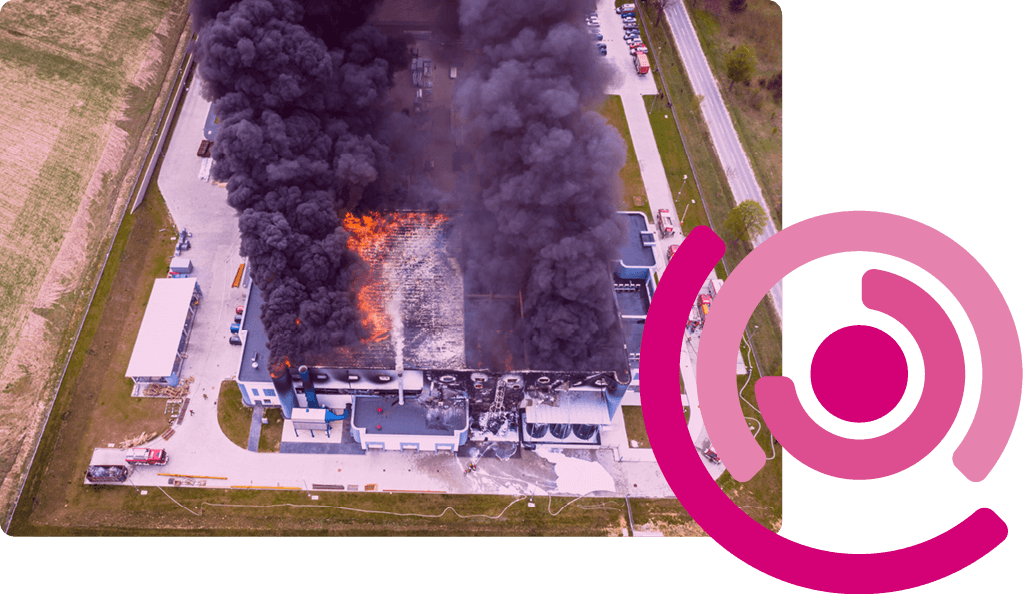
Speak to one of our specialist underwriters